












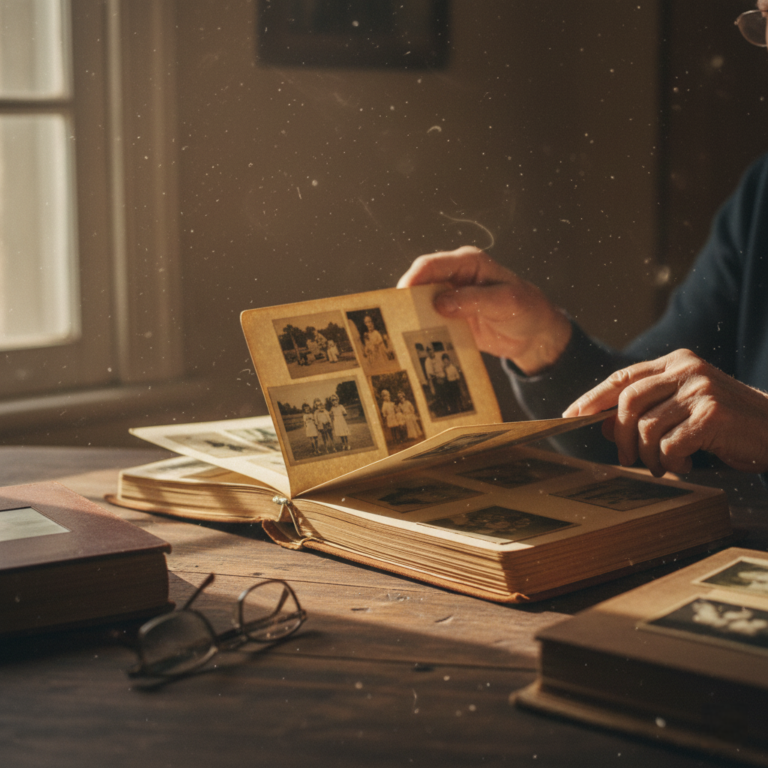
In a world where thousands of photos live quietly inside our smartphones and cloud storage, something deeply human feels missing. Despite the convenience of platforms like Google Photos, many people still feel a stronger emotional connection to old physical photo albums—the kind with faded covers, handwritten notes, and photos gently stuck to thick paper pages.
Why does flipping through an old album often feel more emotional than scrolling endlessly on a screen? The answer lies in psychology, memory, touch, and intentionality.
The Power of Physical Touch and Sensory Memory
Old photo albums engage multiple senses at once.
You don’t just see the photos—you feel them.
-
The weight of the album
-
The texture of the paper
-
The smell of old pages
-
The sound of pages turning
According to cognitive psychology, memories become stronger when multiple senses are involved. This is known as multisensory memory encoding, and it plays a major role in nostalgia.
Digital photos, on the other hand, are experienced only through a flat glass screen, offering very little sensory input.
Research on memory and sensory engagement is discussed in depth on Wikipedia’s page about nostalgia:
https://en.wikipedia.org/wiki/Nostalgia
Scarcity Makes Memories Feel More Valuable
In the past, photos were rare and intentional.
-
Film rolls had limited shots
-
Photos were expensive to develop
-
Each image was carefully chosen
Because of this, every photo mattered.
Today, platforms like Google Photos allow us to store thousands of images effortlessly, including duplicates, blurry shots, and screenshots. While convenient, this abundance reduces emotional impact.
Psychologists often explain this using the scarcity principle—we value things more when they are limited.
Digital storage removes limits. Old albums were built around them.
Old Albums Tell a Clear Story
A physical photo album is usually organized chronologically and purposefully:
-
Childhood
-
School days
-
Weddings
-
Family events
This structure naturally tells a life story.
Google Photos, while powerful, organizes memories algorithmically—by faces, locations, or dates. While efficient, it removes the human narrative behind the collection.
Even Google acknowledges that its platform focuses on automation and AI-driven organization rather than emotional storytelling:
https://www.blog.google/products/photos/
Human Touch vs Artificial Intelligence
Old albums often include:
-
Handwritten captions
-
Dates written in pen
-
Notes like “My first bicycle” or “Eid 1998”
These small imperfections carry emotional fingerprints of the person who created the album.
Digital photos rely heavily on:
-
AI tagging
-
Facial recognition
-
Automated highlights
While impressive, AI cannot replicate emotional intention.
A handwritten note from a parent or grandparent carries meaning that no algorithm can generate.
Slower Experiences Create Deeper Feelings
Looking at an old photo album is a slow process.
You sit down.
You turn pages.
You pause.
You remember.
Scrolling through Google Photos is fast, often distracted, and usually mixed with notifications, messages, and other apps.
Studies show that slower, focused experiences allow deeper emotional processing. This is why people often feel calmer and more reflective when interacting with physical objects.
This idea is also discussed in research around mindfulness and memory retention:
https://www.psychologytoday.com/us/basics/memory
Shared Moments Feel More Real Offline
Old albums were meant to be shared physically:
-
Sitting with family
-
Passing the album around
-
Listening to stories behind each photo
These moments created collective memory.
Today, sharing photos usually means sending a link or scrolling together briefly on a phone. The emotional depth is often lost.
Physical albums create a social ritual—something digital platforms struggle to replace.
Imperfection Makes Old Photos More Human
Old photos are often:
-
Slightly blurred
-
Poorly lit
-
Faded over time
Yet these imperfections make them feel authentic.
Modern digital photos are often edited, filtered, and optimized. While visually pleasing, they sometimes feel less real.
Imperfection reminds us that memories are human, fragile, and emotional.
Why Google Photos Still Matters (But Differently)
This doesn’t mean Google Photos is bad. In fact, it’s one of the best tools for:
-
Backup and security
-
Searching images quickly
-
Preventing memory loss
You can read about its storage and backup features here:
https://support.google.com/photos/
However, Google Photos works best as a storage system, not a memory experience.
Old albums were never about storage—they were about meaning.
Bridging the Gap: Digital Albums with Emotional Value
The future may lie in combining both worlds:
-
Digitizing old albums to protect them
-
Creating curated digital albums instead of dumping thousands of photos
-
Printing selected memories into physical books
Many people are now returning to printed photo books to reclaim emotional storytelling in a digital age.
Final Thoughts
Old photo albums feel more emotional than Google Photos because they were created with intention, limitation, and love.
They slow us down.
They involve our senses.
They tell stories—not just store data.
Technology can preserve memories, but only humans can give them meaning.
Perhaps the solution isn’t choosing between physical or digital—but remembering why we collect memories in the first place.


0 Comments